America!
1776 · 2026
A Rescued American Classic
Now Annotated & Updated for the Contemporary ReaderThe Valley
of Shadows
Recollections of Lincoln Country, 1858–63
A Lost Masterpiece of American Literature
Before the first shots of the Civil War were fired, the prairie towns of Lincoln Country trembled with something harder to name than politics — a collective spiritual dread, a sense that fate itself was moving. The Valley of Shadows is the story of those years told by the boy who lived them. Written by Francis Grierson and published in 1909, it is part memoir, part prose poem, part prophecy — a firsthand witness account of the American soul on the edge of catastrophe.
Edmund Wilson, writing in his landmark study Patriotic Gore, called it unlike anything else written about the Civil War era. The 1948 History Book Club editor went further, declaring it not a minor classic but simply a classic — one of the most remarkable books in the American literary canon, and one of the most forgotten.
“The Valley of Shadows achieves an amazing fusion of historical events with the emotion of the strange, sensitive man recording them... Its prose is alive, strong, subtle, of warm color.”
— Editor's Note, History Book Club Edition, 1948We are living through times that echo those years. The divisions, the anxieties, the searching for signs — all feel strangely present. Grierson's settlers faced what they believed was the end of their world, and they met it with faith, community, and an unshakeable conviction that something greater was unfolding. This book speaks directly to that experience.
The narrative opens on the Illinois prairie in the late 1850s — the Lincoln-Douglas debates, camp meetings charged with fire-and-brimstone prophecy, settlers wrestling with the comet in the sky and the earthquake underfoot, all sensing that the old order was passing. Grierson renders these scenes with extraordinary vividness, moving between the mystical and the political, the comic and the sacred.
His characters are unforgettable: Socrates, the prairie philosopher who whittles sticks while dispensing natural wisdom; the Load-Bearer, who literally walks miles to take on the spiritual burdens of his neighbors; Kezia Jordan, whose voice in hymn seems to carry the grief of a continent. These are not invented types — they are real people, remembered across forty years of exile, written with the precision of a man who spent decades among the literary élites of Paris and London but never forgot the souls he grew up among.
Praised by Stéphane Mallarmé, Maurice Maeterlinck, and Edmund Wilson. Forgotten almost completely. Until now.
The Complete Valley of Shadows Collection
The heart of the book belongs to the seasons the Shepard family lived in the Big Log House on the Sangamon County prairie, as their small farm quietly became a stop on the Underground Railroad and the country slid toward war. Those are the chapters Kirk Laughead selected and recorded as The Sangamon Story. It was a time of faith under fire, neighbors bound by conscience, and the moral reckoning of a nation on the edge.
The Collection brings the whole restored work together in one place. It includes the Annotated & Updated Edition — Grierson's complete text, translated out of its phonetic prairie dialect for the contemporary reader — and The Sangamon Story audiobook, the selected readings narrated by Kirk Laughead, with a read-along companion eBook. And for those who want to stand where the modern reader rarely can, it also includes the original 1909 text in Grierson's own authentic prairie vernacular — the book exactly as he wrote it, spelled to the sound of the voices he remembered. The pieces can be found scattered across the retailers; this is the only place they arrive together, direct from the man who spent forty years bringing them back.
Secure checkout · Instant digital delivery · Annotated edition, audiobook, and the original 1909 text — together, yours to keep.
Rescuing a Voice Lost in Translation
Grierson was a man of extraordinary gifts — concert pianist, mystic, essayist, and witness to history. But as a writer, he faced a challenge that may have cost him the audience his work deserved. To preserve the authentic sound of the Illinois prairie voices he loved, he rendered their speech in a dense phonetic dialect on the page: “I 'low they ain't like us folks — they hed a heap o' hired help whar they come from.”
For readers in 1909, this was already challenging. For modern readers, it became a wall between them and one of the most remarkable narratives in American letters. When Kirk Laughead adapted the work for theatrical performance, he discovered the same problem his actors did: no one could read the script aloud without stumbling. The phonetic spelling that was meant to evoke authenticity had become an obstacle to it.
The solution was not to sanitize the dialect, but to translate it into established literary conventions — the same conventions used by Mark Twain, Harriet Beecher Stowe, and every great American regionalist writer. The humor, the cadence, the character, the unmistakable sound of the Illinois prairie — all of it is preserved. What changed is readability. The same man speaks; you can now hear him.
The annotated and updated edition, published under Kirk Laughead's editorial hand, also adds contextual notes that place the characters and events within their historical moment — bridging Grierson's lyrical personal vision and the sweeping historical forces moving beneath it. The result is the book The Valley of Shadows always wanted to be: accessible to every reader, without surrendering a word of its original soul.
The free eBook gives you Grierson's original 1909 text — raw, phonetic, and extraordinary. The updated and annotated edition gives you the version we believe will finally find the audience this masterpiece has always deserved. (The Annotated Edition and the audiobook come together in your Complete Collection.)
Get the Complete Collection — $4.99 → The Annotated & Updated Edition, the audiobook, and the original 1909 text — together in your Complete Collection.
Claim Your Free Copy of
The Valley of Shadows
Grierson's original 1909 text — exactly as he wrote it, in his own phonetic voice — free as our gift to you. Click below and we'll send you the download link directly.
We respect your privacy and will never share your information.
The Villa Montezuma Museum
Jesse Shepard's Palace of the Arts · San Diego, California
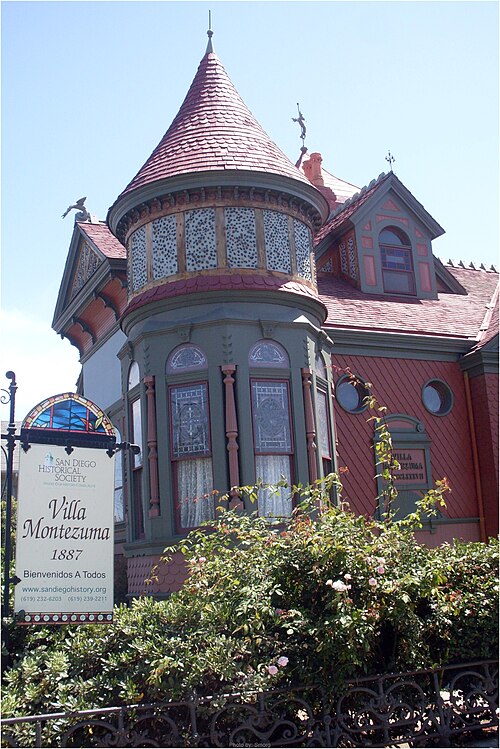
In 1887, two wealthy San Diego admirers offered Jesse Shepard something no artist could refuse: a mansion built exactly to his specifications, a palace worthy of the mystic pianist who had enchanted royalty across Europe. The result was the Villa Montezuma — a breathtaking Victorian Gothic masterpiece in San Diego's Sherman Heights neighborhood, now considered one of the finest examples of Queen Anne architecture in California.
“The Villa Montezuma isn't haunted — it's enchanted.”
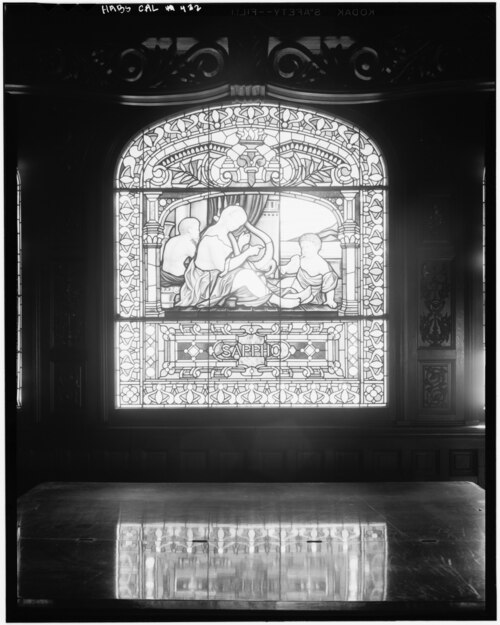
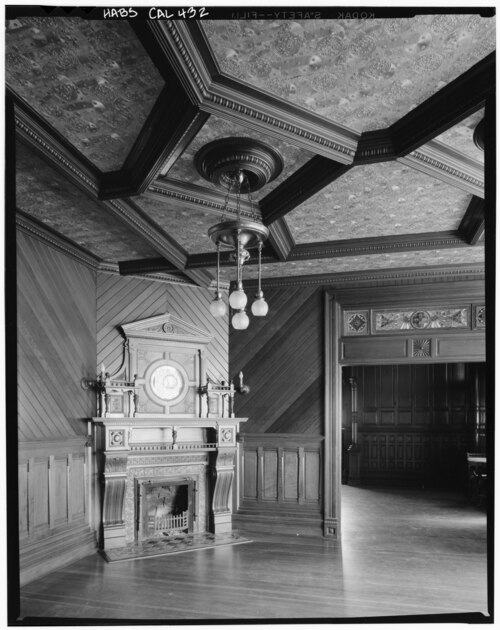
Shepard lived in the Villa for only two years before moving on to Europe, but he transformed there. It was within these walls, surrounded by hand-painted ceilings, art glass windows depicting Sappho and other muses, and the carved woodwork of an age that believed beauty was sacred, that Jesse Shepard became Francis Grierson — setting aside the concert stage for the writer's desk, and beginning the literary journey that would eventually produce The Valley of Shadows.
The Villa Montezuma is now a museum owned by the City of San Diego and lovingly operated by the Friends of the Villa Montezuma (FOVM), a nonprofit organization dedicated to its preservation. Currently undergoing a major restoration funded in part by a $5 million state grant, the Villa opens its doors every Saturday and Sunday for guided tours — and hosts an extraordinary series of salon concerts, literary events, and cultural programs that would have delighted its original owner.
If you love The Valley of Shadows, a visit to the Villa Montezuma is the closest you can come to stepping inside the world that made it possible.
Plan Your Visit
1925 K Street (corner of 20th & K)
Sherman Heights Historic District
San Diego, CA 92102
Tours
Saturdays & Sundays at 1:00 & 2:15 pm
(Special group & school tours by arrangement)
Adults: $15
Seniors 65+, Military, Students w/ ID: $12
Children 12 & under: Free with paid adult
Groups of 8+: $10 per person
Reserve Your Spot
Text: 619-233-8833
Email: FOVM@VillaMontezumaMuseum.org